
Use the original key’s button layout, blade fitting and internal arrangement as evidence before replacing only the casing.
- A replacement shell changes the outer housing, so a transfer normally depends on having usable original key components.
- Matching three buttons narrows the options but cannot confirm that the housing, board, battery and transponder will fit.
- The original blade profile and its attachment method must match the replacement shell independently of the vehicle model name.
- Internal posts, guides, clips, clearances and battery space determine whether transferred components can sit securely and operate correctly.
- If the original electronics, transponder or blade are missing or damaged, a shell-only replacement may not solve the key problem.
- A complete replacement key is a different route that may involve separate electronics, blade cutting or vehicle-specific programming requirements.
A damaged casing does not automatically mean you need a complete replacement key. In many cases, the original electronics, buttons, battery holder, transponder and blade can be moved into a Mini Cooper R56 replacement key shell—but only if the new casing matches the original internally, not just in appearance.
The safest compatibility reference is the key you already have. Compare its button layout, blade fitting, case shape, screw or clip positions and the way the circuit board sits inside. A shell that looks correct in a product photo may still use a different button arrangement, accept another blade profile or leave the electronics unsupported. The transponder also needs to remain correctly positioned; transferring the visible parts alone does not prove that the vehicle will recognise the key.
This guide explains what to check before ordering or opening the casing, how to compare the main components without relying on appearance alone, and which differences should make you stop before attempting a transfer. The same practical checks can help when reviewing shell options listed by car-keys.lt, although the original key remains the deciding reference. If the blade, circuit board or transponder format cannot be clearly matched, treating the shell as unconfirmed is safer than forcing components into it.
Start With the Original R56 Key
Before ordering a Mini Cooper R56 replacement key shell, treat the key you already have as the reference sample. Record its overall shape, number of buttons, button arrangement and any visible markings. A three-button Mini key shell may look right in a product photo, but the model name alone does not prove that it matches your particular key.
First, decide whether the problem is limited to the casing. A cracked cover, worn button surface or damaged key ring area may indicate a shell-only repair. However, intermittent operation, missing buttons, a loose battery or visible damage to the electronic section points to a wider problem that a replacement car key casing may not solve. Test the key’s functions before opening it, if it still operates, and note exactly what works and what does not.
Make a component inventory while the original key is still assembled. Check whether the outer casing, buttons, electronic board, battery, transponder and blade are present, without assuming that every part belongs to the same key. Look for loose pieces, broken clips, corrosion, previous repairs or signs that someone has already modified the key. These observations help distinguish a worn Mini Cooper key housing from an incomplete or damaged key.
Photograph both sides of the key before disassembly. Include close images of the button side, the back, the blade area and any labels or markings. Keep the photographs with notes identifying missing or loose parts. They provide a reference if a small piece falls out during a key shell transfer and make it easier to compare the original with a listing later.
Finally, separate confirmed facts from assumptions. Confirm the exact R56 key variant and, where relevant, its production period rather than relying only on “R56” in a title. Check whether the replacement listing identifies a specific shell variant and describes the same visible layout as your key. If the listing is vague, treat compatibility as unconfirmed. This simple key compatibility checklist prevents a common mistake: ordering a shell because the vehicle model matches while the original key variant has not been identified.
Why Three Matching Buttons Are Not Enough
Three buttons are only the first visual check, not proof that a Mini Cooper R56 replacement key shell will accept your original parts. Two shells can have the same button count while differing in button position, spacing, size or shape. A raised, recessed or differently curved button may also require a matching opening in the casing. Compare the original key with the product photographs rather than relying on the phrase “three-button Mini key shell.”
Check the complete outer profile as well. Compare the shell’s length, width, thickness, corners, key-ring end and the shape of the front and rear covers. A replacement car key casing may look correct from the front but have a different side profile or a different split line between the halves. Even a small change in the housing dimensions can prevent the original casing pieces from closing or leave the key sitting unevenly.
The key blade profile is another exterior clue, although it should not be treated as final confirmation of the whole shell. Look at the blade’s visible shape, its folded or extended position, and where it sits in relation to the housing. A shell intended for a visually similar key may use a different blade outline or a different external opening. Do not assume that a matching button panel makes the blade area compatible.
Be cautious with listings that group several vehicles, years or key versions under one title. Model and year labels can help narrow the search, but they are not a substitute for comparing the actual key. The same vehicle name may appear alongside more than one casing design, while a seller’s generic “R56” description may omit details that matter to your key. Treat such labels as clues and verify the physical design separately.
When photographs are ambiguous, place the original key and the proposed Mini Cooper key shell replacement side by side. Compare them at the same angle and, if possible, use a ruler to check overall length, width and thickness. Request clear photographs of the front, back, side and button openings if the listing does not show them. Measurements are useful, but they should describe the whole profile rather than only the largest flat surface.
Use this exterior key compatibility checklist before ordering: button count, button layout, button shape, housing outline, thickness, key-ring end, blade opening and visible blade profile. If any of these differ, pause instead of assuming the shell will work. If they all match, you have stronger evidence for a possible key shell transfer—but exterior similarity still does not confirm that every original component will seat correctly inside.
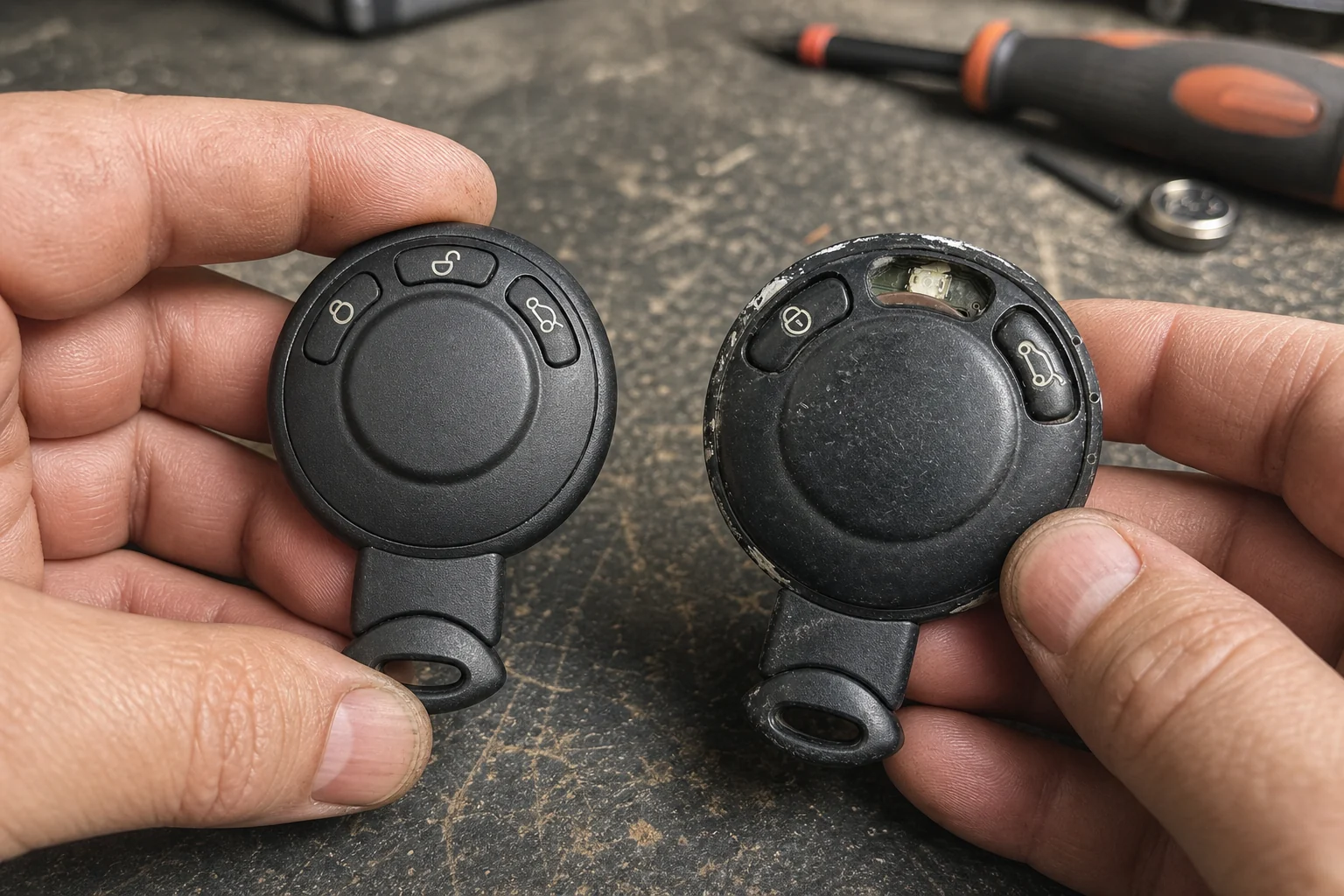
Check Every Transferable Part and Its Seating Point
Once the original key has been documented, compare its internal parts with the replacement shell—not just the outside. Open the product images or obtain clear internal photographs before ordering a Mini Cooper R56 key shell replacement. You need to see the posts, rails, clips, recesses and battery cavity. A shell can have the correct outer shape but lack the support needed to hold the original circuit board securely.
Start with the circuit board. Compare its outline, screw holes, locating notches and contact areas with the replacement shell’s internal geometry. The board should sit flat, with each mounting point aligned and no component pressed against the casing when the two halves close. Check the board’s orientation as well: a shell may have posts that accept the board only one way. Do not force a board into place or trim internal supports to make it fit, because that can leave the electronics loose or damage components.
Next, inspect the button mechanism. Confirm that each original button, rubber pad or contact interface has a matching opening, guide or support in the new Mini Cooper key housing. Check the distance between the button surface and the circuit board’s switches. If the shell presses a switch continuously, fails to reach it, or allows the button pad to move sideways, the key may not operate reliably even though the board fits. Also look for small clips that keep the button insert from lifting when the casing is opened.
Verify the battery separately. Record the battery type and observe which side faces up in the original key before removing it. Then compare the replacement shell’s battery recess, contact points and retaining lip. The cavity must leave enough room for the battery and allow the contacts to press against it without excessive force. A missing clip or shallow recess can let the battery shift when the key is handled. If the shell is supplied without matching battery contacts, do not assume the original contacts will transfer unless the moulded supports hold them in the same position.
The transponder needs its own check because it may not be located with the circuit board. Identify the original transponder and note whether it sits in a dedicated pocket, channel or holder. Compare that position with the replacement shell and confirm how it is retained. A loose insert can rattle, move away from its intended position or fall out during assembly. Do not rely on the shell’s button count or board compartment to confirm transponder compatibility; the replacement must provide the same physical retention arrangement, and the original transponder must remain undamaged.
Assess the blade independently from the electronics. Compare the blade profile, thickness, shoulder and length, then inspect how each blade is attached. Depending on the design, the blade may use a pivot, pin, screw, clip or a fixed attachment. The replacement shell must support the original method, including space for the pivot hardware and enough material around the attachment point. If the shell includes a blank blade or a different mounting arrangement, the original blade may not transfer even when the board and buttons do.
Treat the transfer as viable only when every part has a defined seating point: the board is supported, the buttons move freely, the battery is retained, the transponder is secured and the blade attachment matches. If any one of these points is unclear from the listing or comparison, pause before disassembly and seek a clearer internal view rather than relying on the vehicle name alone.
- Use the original key as the compatibility reference
- Match more than the button count
- Confirm board, battery, transponder and blade placement
- Stop if a critical fit cannot be verified
Know When a Shell Is the Wrong Fix
A Mini Cooper R56 replacement key shell is appropriate only when the original parts you need to keep are present and usable. If the casing is cracked or worn but the circuit board, transponder, battery arrangement and blade can all be recovered, a shell-only transfer may address the problem. If one of those parts is missing or already faulty, changing the Mini Cooper key housing will not restore it.
A damaged circuit board changes the job from casing replacement to key repair or complete replacement. Signs include broken tracks, corrosion, loose components, or buttons that still fail after the casing is removed from the diagnosis. A shell may provide fresh button covers, but it cannot repair an electrical fault. Similarly, a missing or unusable transponder can prevent the vehicle from recognising the key even if the remote buttons look and feel new.
The blade must also be judged separately. A bent, badly worn or incorrect blade may not be recoverable simply by moving it into another casing. Depending on the replacement route, the blade may need to be replaced or cut to match the vehicle. Do not assume that a shell transfer includes this work; confirm whether the original blade is being retained and whether the new casing uses the same attachment method.
Starting and remote functions should be treated as different tests. If the vehicle does not start, the issue may involve the immobiliser-related key components rather than the outer casing. If the locks do not respond, the cause may be the board, battery, contacts or vehicle-side system. A replacement car key casing cannot correct a fault that existed before the casing was damaged.
Choose a complete replacement key route when the original electronics or transponder cannot be recovered, the blade is unsuitable, or the vehicle requires a key that must be cut and programmed. The exact requirements depend on the vehicle and the replacement key. Before ordering a Mini Cooper key shell replacement, establish whether you are transferring usable parts or replacing the entire key; these are different jobs with different compatibility conditions.
Complete the Pre-Order and Pre-Disassembly Checklist
Before ordering a Mini Cooper R56 replacement key shell, make a side-by-side record of the original key and the listing. Photograph the front, back, side profile, blade connection and, where available, the opened shell. Compare those images with the seller’s photographs, including the inside of the housing. Clear seller-supplied details for the exact shell design are more useful than a broad “R56 compatible” label.
Then make a simple component map. Every part you intend to transfer should have a visible, matching home in the replacement shell:
- circuit board and its mounting points;
- buttons, guides and retaining clips;
- battery and its orientation;
- transponder and its retention area;
- blade, pivot, pin, screw or other attachment feature.
Do not treat an empty-looking cavity as proof that a part will fit. The listing should show enough internal detail to confirm the relevant recess, support or retaining feature. If a photograph does not reveal an important area, ask for a clearer image or manual confirmation before purchasing. This is especially important when considering a Mini Cooper key housing that resembles the original externally but has a different interior.
Check the blade connection before removing anything from the old casing. Confirm whether the replacement uses the same attachment method and whether the blade profile can be retained. If the blade appears to be fixed differently, stop and resolve that point first; forcing or improvised fitting can damage the housing or leave the key unusable.
During transfer, each part should seat naturally and remain secure when the shell is closed. Do not force the board, battery, buttons or transponder into place, and do not close the casing to test a component that is visibly misaligned. Pressure may damage a clip, contact or circuit board.
Use this final go/no-go rule: proceed only when the photographs, listing details and direct comparison confirm every critical transfer point. If one essential feature cannot be verified, pause before ordering or disassembly and obtain manual confirmation.
A replacement Mini Cooper R56 shell may solve a worn casing, but only if its internal layout matches the original key. Before buying, compare the button arrangement, circuit-board shape, battery position, transponder location, and blade fitting. Some shells are sold for similar-looking keys yet cannot accept every original component. Treat the shell as a housing, not a guaranteed universal replacement: transfer parts only when the physical fit and key configuration are confirmed. If any part differs or the transponder and blade cannot be secured correctly, the shell may not be a reliable solution.
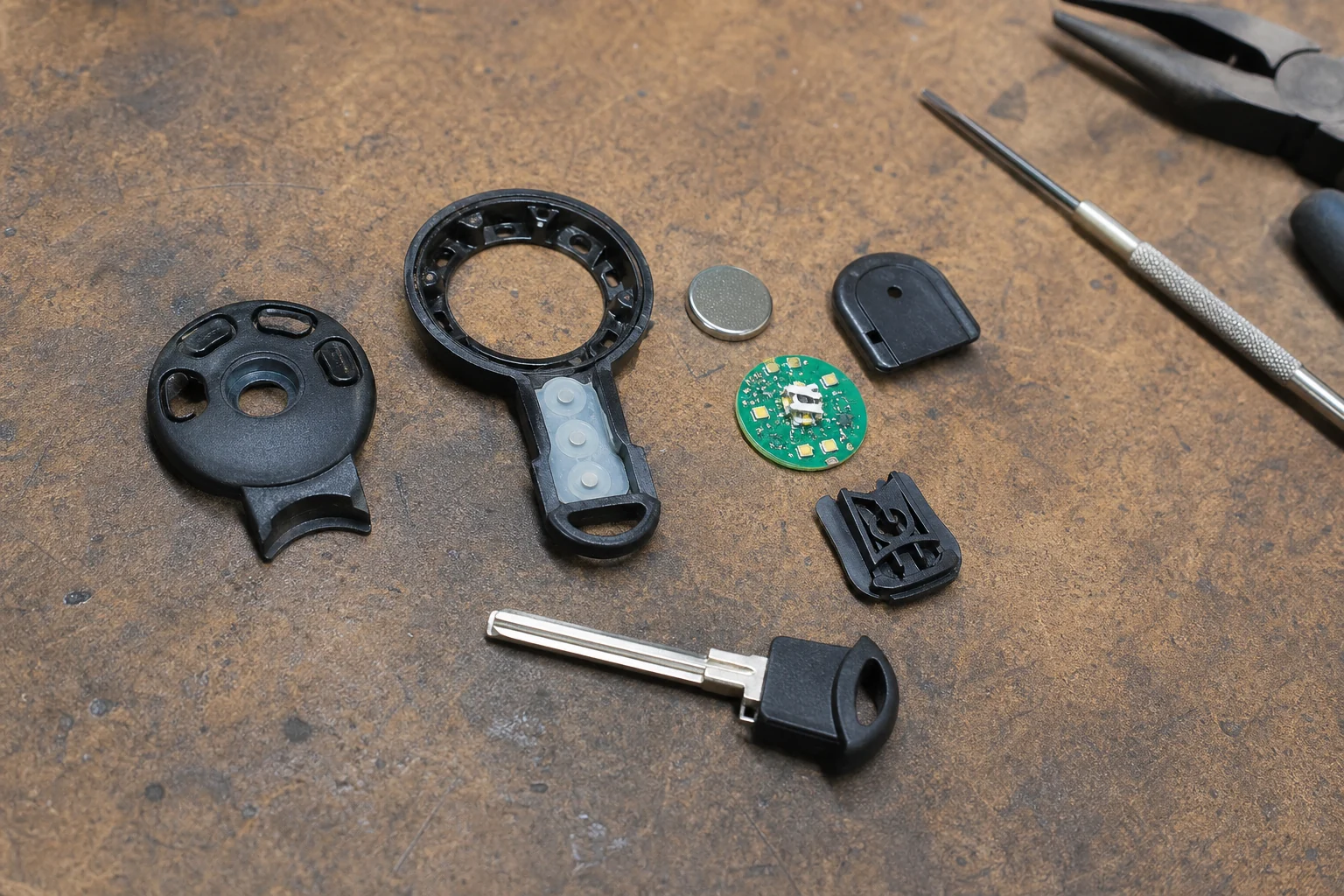
- A similar exterior does not prove internal compatibility
- Do not compress or bend the circuit board
- Do not leave the transponder or battery loose
- Reassess the shell if the blade attachment differs
Choose the option that matches your vehicle and situation.
Frequently asked questions
Can I use any three-button Mini Cooper R56 key shell?
No. Three buttons only describe the visible layout. The replacement must also accommodate the original circuit board, battery arrangement, transponder, button contacts, and blade attachment. Compare the internal shape and component positions of your key with the shell, rather than relying on the Mini Cooper R56 name or the number of buttons alone.
What should I photograph before opening the original key?
Take clear photos of both sides of the closed key, the button layout, the blade connection, and the inside after opening it. Photograph the position and orientation of each visible component before removing anything. These images provide a useful reference if a button pad, retaining clip, battery contact, or transponder moves during the transfer.
Can the original circuit board be moved into a new R56 shell?
Possibly, but the board must match more than the outer shape. Check its outline, mounting points, guide rails, clips, button alignment, and clearance from the case halves. If the board rocks, bends, or sits above the intended level, the shell is not ready for transfer, even if the exterior appears identical.
Does the original transponder need to be transferred?
If the key uses a separate transponder, its position and retention must be confirmed before closing the new shell. A replacement casing does not provide the vehicle-related component from your original key. Do not discard small inserts or assume that placing the circuit board in the new housing automatically preserves every required part.
Can I reuse the original blade in a replacement shell?
Only if the blade profile and attachment method match. The replacement shell may use a pivot, pin, clip, or another retaining arrangement, and these details must suit the original blade. Check the blade’s seating depth and movement independently of the vehicle name; a visually similar shell can still hold it incorrectly.
What if the replacement shell looks right but the board does not sit flat?
Stop and do not force the case closed. An incorrectly seated board can leave buttons misaligned, reduce internal clearance, or place pressure on components and retaining points. Recheck the shell’s guides and clips, then compare the parts with your photographs. If the mismatch remains, use a different verified shell.
Will a replacement shell fix a key that no longer starts the car?
Usually, a shell addresses physical damage to the housing, not an electronic, transponder, battery-contact, or vehicle-system fault. If the key stopped working before the case became damaged, identify that failure separately. Moving the original parts into a new shell may preserve them, but it does not repair a fault they already had.
When should I choose a complete replacement key instead of a shell?
Consider a complete replacement when original components are missing or damaged, the blade cannot be reused, or no compatible shell can be confirmed. A complete key may still require a correctly cut blade and programming, which must be checked separately. For the next step, car-keys.lt can help you assess which route fits your situation.
