
Button layout, housing shape, blade design and internal space can all affect whether your original parts transfer correctly.
- A key shell replaces the outer housing; it does not automatically include or replace the circuit board, battery, transponder or blade.
- Button count narrows the options, but button positions, symbols, spacing and control layout provide stronger physical comparison points.
- A Suzuki model name alone cannot prove fit because keys may differ by design, production period, remote version or internal arrangement.
- The replacement housing must provide suitable space and supports for the original board, battery, buttons and transponder without forcing components.
- Blade compatibility is separate from casing fit, so compare the blade shape, folding or fixed arrangement, pivot and supplied contents.
- A shell is generally appropriate only when the retained components remain usable and the listing’s fit evidence matches the original key.
A matching Suzuki model name or button count does not prove that a replacement shell will fit your key. The reliable starting point is the original key in your hand: compare its housing shape, button arrangement, blade style and the space available for the existing electronics. A Suzuki remote key shell is only a replacement casing, so compatibility depends on whether your original components can be transferred into it—not simply on whether the shell is advertised for the same vehicle model.
Before ordering, check the physical details that are easy to overlook. Two keys may have the same number of buttons but use different button positions, case profiles or internal supports. Their blades may also differ in shape, attachment method or the way they fold into the housing. Even when the casing closes correctly, the original circuit board and transponder must still be accommodated without pressure or movement.
This guide explains how to use your existing key as the main reference, which differences matter during a visual comparison, and where a listing may leave compatibility uncertain. It also clarifies the limits of shell compatibility: a replacement housing does not automatically replace the blade, remote electronics or vehicle programming. If those parts are not suitable for transfer, the shell alone will not solve the problem.
What a Suzuki Key Shell Actually Replaces
A Suzuki key shell is the outer housing of the key, not automatically a complete replacement key. It normally includes the plastic casing, its cover sections, button pad and, depending on the listing, a blank or existing-style key blade. The exact contents vary, so check the product description rather than assuming that a “Suzuki remote key shell” includes every part needed to start and operate the vehicle.
The main purpose of a replacement Suzuki key housing is usually to give the original key a new physical enclosure. If the old case is cracked, worn around the buttons or no longer holds together securely, the original remote circuit board and battery may be intended for transfer into the new housing. This means the shell’s appearance alone does not prove that it can accept your parts. The listing should state whether it is supplied empty and whether the original electronics are expected to be reused.
A Suzuki key fob shell also does not necessarily include the car’s immobiliser transponder. The remote circuit board handles functions such as button signals, while the transponder is the part recognised by the vehicle’s immobiliser system; these may be separate components or arranged differently between key designs. Do not assume that moving the remote board transfers the immobiliser function as well. Confirm which original components must be retained and whether the supplied shell is designed around that arrangement.
This distinction matters because a new outer casing can look correct while proving very little about complete Suzuki remote key compatibility. A matching vehicle name, similar button layout or familiar Suzuki remote casing may identify only the general product family. It does not confirm that the original circuit board, battery holder, transponder and other retained parts belong in that particular housing. Internal layouts are not universal across all Suzuki keys, even when the model name appears similar.
The condition of the original key also affects whether a shell-only order makes sense. A replacement casing cannot repair a damaged circuit board, missing transponder or broken component that must be transferred. Likewise, if the old housing has allowed parts to loosen or become damaged, reusing them may not produce a reliable result. Before ordering, record exactly what is present in your current key and compare it with the listing’s supplied contents and transfer instructions. Treat the purchase as a replacement shell unless the seller clearly specifies that electronics, transponder and any other required parts are included.
Use the Original Key as Your Main Fit Reference
The most reliable starting point is the key in your hand, not the vehicle’s model name. Place it beside the listing photographs and compare the overall housing shape: length, width, thickness, rounded or squared corners, and the proportions of the front and rear sections. Two keys may both be described for the same Suzuki model while belonging to different versions, production periods or remote designs. A Suzuki key shell should look like the same physical key before you treat the listing as a plausible match.
Next, compare the buttons one by one. Check the number of buttons, their shape, their position relative to the edges and the symbols printed on them. A three-button layout is not sufficient evidence if the buttons are arranged differently or the symbols appear in another order. Also note whether the original has separate raised buttons, a single rubber pad or differently sized controls. These details can distinguish versions that otherwise look very similar.
Look closely at the casing’s dividing line and outer edges. The seam may run around the side in a different position, and the edge profile may be flat, bevelled, rounded or stepped. Compare the location of visible joins, the shape of the key’s ends and any recesses around the buttons. If the replacement Suzuki key housing has a noticeably different seam or edge contour, matching button count does not overcome that difference. Proportions and moulded details are usually stronger visual clues than a broad vehicle description.
Before ordering, take clear photographs of your original key from the front, back, both sides and both ends. Use even lighting, keep the camera square to the face being photographed and include a close view of the button symbols. If the listing shows only one front image, ask for or look for photographs of the other side and the ends; those views can reveal a different thickness, seam or rear shape. Compare your photographs with the actual listing images rather than relying on a generic product title.
Treat labels such as “for Suzuki [model]” as supporting evidence only. Use them to narrow the search, then confirm that the visible design matches your exact key version and that the seller’s stated fitment details are consistent with the photographs. If the model name matches but the housing shape, button positions or edge profile do not, pause before ordering. Conversely, a visually similar Suzuki remote casing still needs the listing’s stated details checked; photographs can be reused incorrectly or show a different version than the description. Save the listing images and wording alongside your own key photographs so you can identify any unresolved mismatch before purchase.
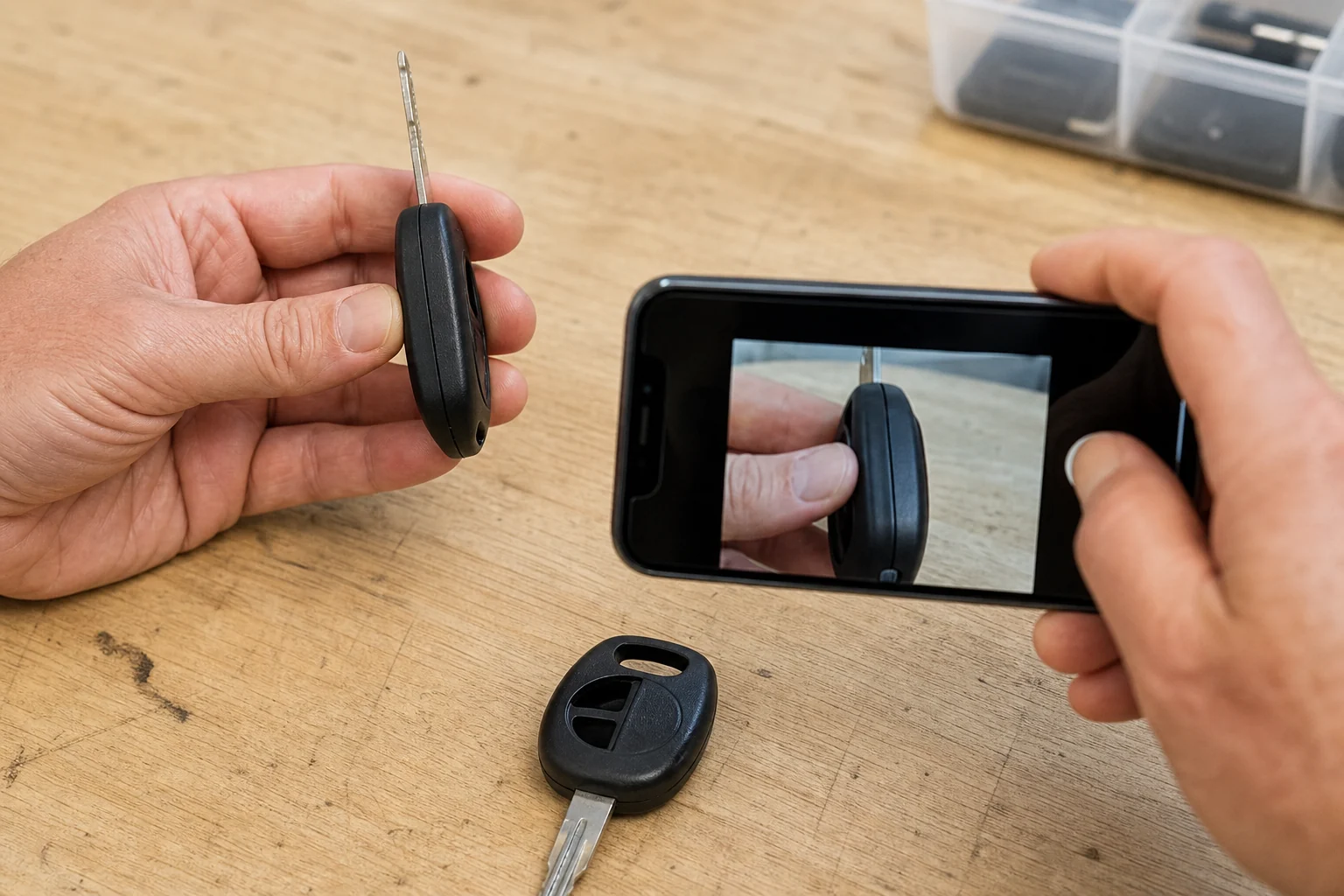
- Photograph both sides of the original key
- Record button symbols and positions
- Note fixed or folding blade design
- Keep the original key available for internal comparison
Check the Housing Against the Parts You Must Transfer
External similarity does not prove that a Suzuki remote key shell can hold your original parts. Open the existing key carefully, if its condition allows, and note how the circuit board, battery, rubber button mat and transponder are positioned. Compare that internal arrangement with the replacement housing before ordering. A shell can have the right outside shape yet use different internal supports or clearances.
Start with the circuit board. Check its outline, thickness and the location of any screw holes, clips, rails or moulded supports that hold it in place. The replacement housing must keep the board in the same position without bending it or leaving it loose. If the board is held by posts or clips, compare their number and location rather than assuming that a similar-looking casing will provide the correct mounting points.
Battery placement is another important check. Compare the battery’s position, orientation and retaining feature in the original key with the space inside the replacement Suzuki key housing. There must also be enough clearance for the battery and its contacts, along with a practical way to reach it when the housing is opened. A different battery position can prevent the cover from closing or place pressure on the board.
The rubber button mat must sit over the correct contact areas on the circuit board. Check whether the new casing has matching locating pins, recesses or guides to keep the mat from shifting. If the mat moves sideways or sits too high, pressing a button may not register reliably even when the board itself fits. This is why button count alone is not enough to establish Suzuki remote key compatibility.
Also identify where the transponder is retained. Depending on the original design, it may be integrated with another component or held in a separate slot. The replacement Suzuki remote casing needs the corresponding space and a secure method of keeping it in position. If that part can move inside the housing, closing the case does not make the transfer safe; the internal retention arrangement still has to match.
When listing photographs do not show the inside, ask the seller to confirm the relevant supports and clearances manually. Provide photographs of the opened original key and, where possible, the circuit board and component layout. Do not rely on a model name, button count or matching exterior when these details are unavailable.
Never force the board, battery, button mat or transponder into place, and do not use improvised pressure to make the cover close. Resistance can indicate a misplaced component, an incompatible support or insufficient clearance. Stop and recheck the internal arrangement instead. A replacement key shell is suitable only when the transferred parts fit securely, remain correctly aligned and can be enclosed without stress.
- Pressure can damage the circuit board
- A loose battery or transponder may not stay correctly positioned
- A housing that needs modification is not confirmed as a compatible fit
Treat Blade Compatibility as a Separate Check
A replacement housing can match your key’s outer shape and still be unusable if the blade arrangement is different. Check the mechanical key separately from the casing. Compare the original blade with the listing images for its overall shape, width, length, shoulder position and profile. A blade that is visibly narrower, wider or shaped differently may not enter the vehicle’s lock correctly, even when the Suzuki remote casing appears identical.
Next, identify whether your original key uses a fixed or folding blade. A fixed blade normally extends from the housing without moving, while a folding design needs room to retract into the case. A shell intended for a folding blade may therefore have a pivot point and internal blade recess that a fixed key cannot use. Conversely, a fixed-blade housing may not provide the hinge arrangement needed for a folding key.
Look closely at the blade’s connection to the housing. Compare the position and shape of the pivot or hinge, the retaining pin or screw, and any surrounding support. The distance from the blade’s shoulder to the pivot matters as well: a small difference can leave the blade sitting too far forward, too far back or at the wrong angle. Compare the original key and the replacement images directly from the side and end, rather than relying on a front photograph alone.
Also check what the listing actually supplies. Some products include a blank blade; others provide only the casing and expect you to transfer the original blade. A supplied blank may still need to be cut to match your vehicle, while a transfer-style shell may not include any new blade at all. Do not treat a product photo showing a blade as proof that one is included in your order.
Before buying, confirm in the description whether the blade is supplied, whether it is fixed or folding, and whether the product is intended for blade transfer. If those details are missing, ask the seller for a clear photo of the hinge or blade mount and a precise contents list. Until the original blade shape and pivot arrangement have been compared, Suzuki remote key compatibility remains unconfirmed, regardless of the button count or vehicle name shown in the listing.
Make the Final Shell-or-Replacement Decision
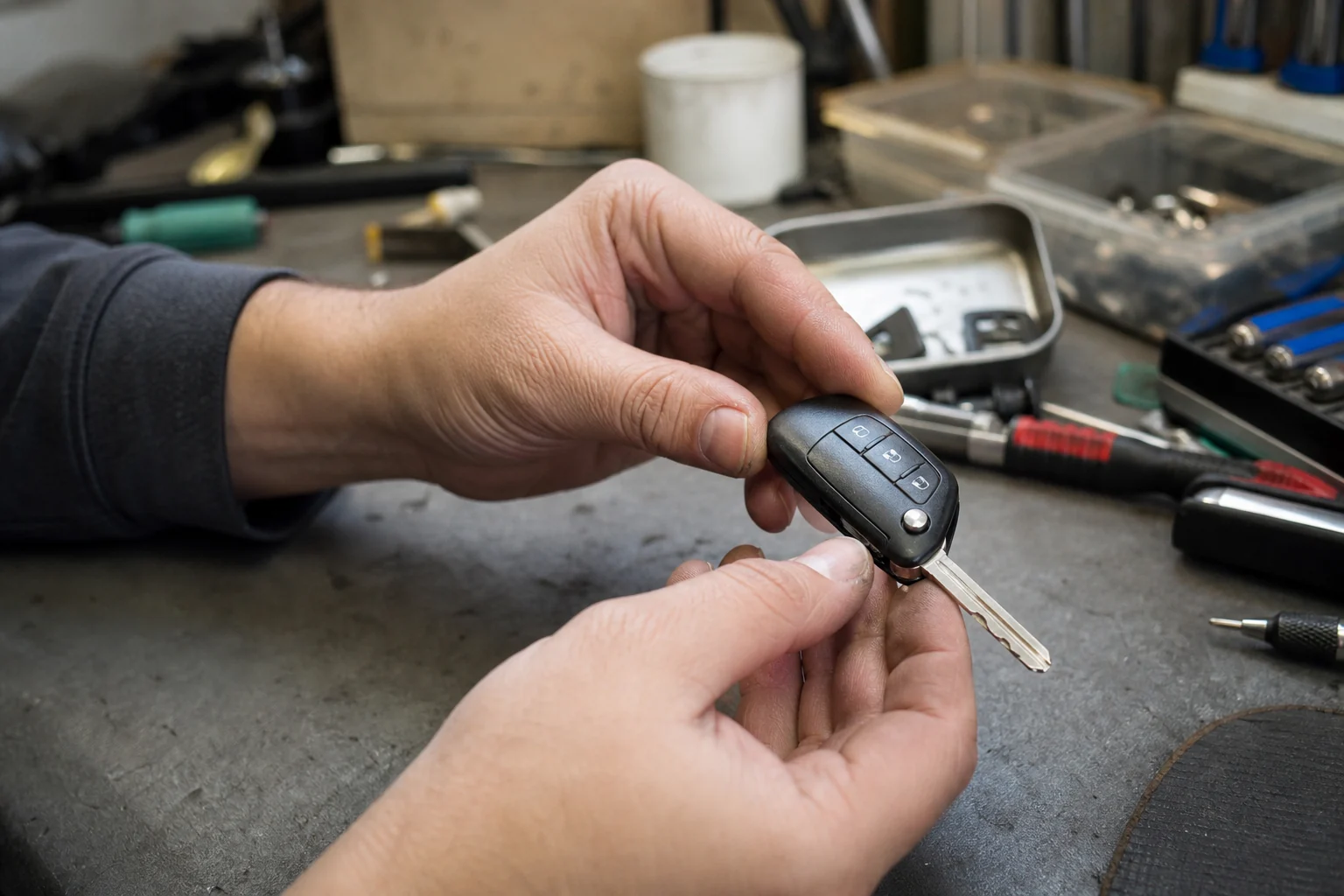
Choose a Suzuki remote key shell only when the parts you plan to transfer are present, usable and supported by clear fit evidence. Before checkout, confirm the condition of the original circuit board, rubber buttons, battery contacts, transponder and mechanical blade. A shell is a reasonable option when these parts are intact and the old housing is the main problem. If one of them is damaged, missing or already unreliable, a new casing alone may not solve the problem.
Treat any sign of physical damage as a stop-and-check point. Cracked board material, corroded contacts, torn buttons, a loose transponder or a damaged blade can make the order unsuitable even if the replacement Suzuki key housing looks correct. Do not assume that a complete-looking listing replaces missing car key electronics or repairs an original component.
Before ordering, record the information that allows a direct comparison: the vehicle model and year, any identification printed on the original key, the number and arrangement of buttons, and clear photographs of the old key from both sides and its ends. Keep screenshots of the listing title, photographs, stated contents and compatibility notes. This record helps reveal contradictions, such as a listing that names the right vehicle but shows a different remote design.
Ask the seller specific questions when the listing is not conclusive: Is the housing intended for this exact key version? Will the original board and button pad sit in the stated positions? Is the transponder retained securely? Is the supplied blade suitable, or must the original blade and hardware be transferred? Ask the seller to compare your photographs with the product rather than replying only with a general model-name confirmation.
Stop the order if the seller cannot provide exact compatibility evidence, the internal arrangement is unclear, or the listing does not state which parts are included. Also stop if your original components cannot be inspected safely or if the answer depends on forcing, modifying or improvising the shell. In those cases, compare a different replacement key shell listing or seek a complete replacement-key assessment instead of treating uncertain Suzuki remote key compatibility as confirmed.
The practical takeaway is simple: treat the Suzuki model name and button count as starting points, not proof that a remote key shell will work. Before ordering, compare the replacement shell with your original key in every detail that matters: blade arrangement, button layout, circuit-board shape, battery position, transponder space, and the internal clips or mounting points. If any of these differ, the shell may not accept your original parts. Order only when the listing details and clear product photos match your existing key, and avoid guessing from appearance alone.
Choose the option that matches your vehicle and situation.
Frequently asked questions
Can two Suzuki keys with the same number of buttons use different shells?
Yes. Button count is only one identification clue. Two keys with the same number of buttons may have different button layouts, housing shapes, blade arrangements or internal supports. Compare the complete exterior and, where possible, the internal arrangement rather than choosing a shell from the button count alone.
Does a replacement shell include a new circuit board?
Not necessarily. A shell may be a housing-only product intended to receive the original circuit board, transponder and other retained parts. Read the listing’s contents carefully and check its photographs. If it does not explicitly include a circuit board or complete key, do not assume that electronics are supplied.
Can I move my original transponder into another Suzuki shell?
That depends on the key design and on whether the replacement housing holds the transponder securely in the correct position. Before ordering, check how the transponder is retained in your original key and whether the new shell provides a comparable space or holder. Do not rely on external appearance alone.
What photos should I take before ordering a Suzuki key shell?
Take clear photos of the front, back, sides, button layout, key-ring end and blade arrangement. If you can open the key safely, photograph the internal layout and component positions as well. These images help with comparison, but photos alone may not prove compatibility when internal measurements or retaining features are unclear.
Will a shell fit if the Suzuki model and year match?
A matching model and year can narrow the search, but they do not establish physical or internal compatibility. The same vehicle range may use more than one key design, and replacement listings may describe housings differently. Confirm the shape, button layout, blade arrangement and internal features against your original key.
Can I use a folding shell for a fixed Suzuki key?
Not automatically. Folding and fixed keys differ in their blade attachment, pivot, spring or retaining parts, as well as in the internal space for the electronics. Compare the mechanical arrangement and the way the original components are held. A similar outer shape does not make the two designs interchangeable.
What if my original Suzuki key circuit board is damaged?
A housing-only shell will not repair a failed circuit board. It may still be useful if the board is intact and only the casing is damaged, but a damaged board requires a different solution. First identify whether the problem is the housing, electronics, blade or more than one component.
What should I do when a listing has no internal photographs?
Ask the seller to confirm compatibility using the key’s complete details, including its layout and internal arrangement. If that confirmation is unavailable, order only when the listing’s evidence clearly matches your original key. Otherwise, the missing internal view is a reason to pause rather than guess.
