
- A replacement key shell is an outer casing, so a casing-only repair generally requires transferring usable original electronics into it.
- Button count and button placement are important compatibility clues because shells must accommodate the original remote layout.
- The same Porsche model name may cover different key designs, making the original key’s shape and component arrangement essential evidence.
- A shell may not include a replacement blade, so blade profile and attachment method must be checked separately before ordering.
- A shell cannot replace missing or damaged transponder and remote electronics because it provides housing rather than the complete key system.
- If the original key internals are unavailable or faulty, a complete replacement-key solution may be more appropriate than a shell alone.
Choosing a Porsche replacement key shell is not the same as buying a complete replacement key. A shell is usually the outer housing: it may include the casing, buttons, and spaces for the original components, but it does not automatically include the circuit board, transponder, battery, or blade. A complete key is a different purchase and may require the correct electronics, a cut blade, and programming for the vehicle.
Compatibility cannot be confirmed from the Porsche model name alone. The same model range may use different key designs across model years, markets, equipment levels, or production periods. Even keys that look similar can differ in button layout, internal board shape, transponder arrangement, or blade design.
This guide explains how to compare Porsche replacement options by model and key type without confusing appearance with actual fitment. It covers the details that can usually be checked from the existing key, the information that may need confirmation from the vehicle or its documentation, and the limits of buying a shell without transferring the original parts. Before ordering, compare the key’s shape and button layout with the listing, then verify the internal components and any required programming separately.
Porsche Key Shell or Complete Replacement Key?
A Porsche replacement key shell is the outer casing only. It replaces worn, cracked or damaged housing parts while leaving the usable components from your original key in place. Depending on the design, the shell may include the front and rear casing sections, button pads, decorative trim or a logo insert, but the product description must confirm this.
A shell is therefore suitable when the original key still has working internal parts and those parts can be transferred safely. For example, if the buttons have become difficult to press because the casing is damaged, a new Porsche key fob shell may restore the physical housing without replacing the key’s electronic components. This route does not create a new programmed key; it only provides a new case for the existing one.
The transfer may not be practical if the original electronics are damaged, the transponder is missing, the blade cannot be reused or the replacement casing does not accept the original components. A casing-only repair can also be unsuitable when the original housing cannot be opened without damaging an internal part. The relevant question is not simply whether a listing is called a Porsche two-button key shell or Porsche three-button key shell, but whether its construction matches the parts you intend to retain.
A complete replacement key is a broader replacement route. It may be supplied with some combination of a casing, buttons, circuit board or other electronics, transponder, key blade and battery. However, “complete” is not a universal technical specification. One product may be an assembled physical key that still requires programming; another may contain only selected parts. Some listings use the term for a key body and electronics but exclude the blade, battery or programming service.
For that reason, neither a shell nor a complete key should be assumed to include every part needed for immediate use. A shell does not automatically include electronics, a transponder, a blade or coding. A complete key does not automatically mean that it is programmed, cut, ready to start the vehicle or compatible with every Porsche of the named model range. Exact contents depend on the product and the replacement service offering them.
Use the shell option when the original internal assembly remains usable and the casing is the only failed part. Consider a complete Porsche key replacement when essential original components are missing or faulty, but confirm precisely which components are supplied and which additional work is required. This component-based distinction is more reliable than choosing between replacement options by label alone.
- A shell is housing, not automatically a complete key.
- A complete replacement may be more suitable when original internals are unavailable or faulty.
- Always verify included electronics, transponder and blade separately.
Why a Porsche Model Name Does Not Prove Key Compatibility
A Porsche model name is only a starting point when comparing replacement options. The same model line may use different key designs across generations, production periods or markets. A listing described as a “Porsche replacement key shell by model” can therefore appear relevant while its housing does not match your original key.
The original key is usually the strongest visual reference. Compare it with the product photographs from several angles, rather than relying on the vehicle name in the title. A close match should be visible in the overall outline, button arrangement, key-ring end, seam lines and the shape of the housing. If the listing shows only a front view, there may not be enough evidence to judge compatibility.
Compare the button layout
Count the buttons, then check their position and proportions. Two keys may both have three buttons but place them in a different vertical order, use a different central button shape or leave different gaps between controls. A button symbol may also be located on a separate raised area rather than directly on the main face.
Button count is useful for narrowing down Porsche replacement key options, but it is not proof of fitment by itself. Treat a “Porsche two-button key shell” or “Porsche three-button key shell” label as a description of the design, not confirmation that it suits every vehicle with that model name. The button cut-outs must align with the original key’s rubber pad or button faces without forcing them into position.
Compare the housing profile
Next, compare the key’s silhouette and thickness. Look at the rounded or angular corners, the length of the upper section, the position of the key-ring opening and the way the front and rear sections meet. Small differences in the housing profile can prevent the original parts from sitting correctly, even when the front button layout looks similar.
Keep the original key beside the product image and compare the same features in the same orientation. If the shape, button placement or rear profile differs, do not assume that a model-name match will resolve the difference. Ask for confirmation based on the exact key design or use clear photographs of your original key.
This approach is more reliable than searching by model alone. The vehicle model, generation and market may help narrow the results, but the original key should remain the primary comparison reference for Porsche key compatibility.
Check the Shell Against Every Key Component
A reliable Porsche replacement key shell comparison starts with the parts inside your original key, not just the casing’s outside shape. Open the original only if you can do so without damaging it, then photograph the internal layout. Compare that reference with the seller’s images or technical description: note the position of the circuit board, battery, button pad, transponder holder and blade connection. Two housings can look similar externally but have different locating posts, clips or clearances.
Remote electronics and transponder
Check the remote circuit board and the button arrangement separately. Count the buttons and compare their positions, shapes and symbols with the replacement housing. A Porsche two-button key shell is not interchangeable with a Porsche three-button key shell merely because the overall outline appears close. The cavity must also support the original board without pressing on switches or leaving the battery unsecured.
Confirm what the listing says about the remote electronics. Some products are intended for transfer of the original circuit board; others may be supplied with electronics, while some exclude them entirely. Do not assume that a button pad, board or battery is included because it appears in a product photograph. If the original remote board is missing, damaged or from a different design, a shell alone does not provide a replacement transmitter.
The transponder requires its own check. Verify whether the original key has a separate transponder, where it sits, and whether the new shell has a matching pocket or retaining feature. Confirm whether the product includes a transponder, is designed for transfer of the existing one, or excludes it. A shell cannot replace a missing or faulty transponder, and moving one without confirming its condition may leave the physical key unable to perform its intended function.
Blade and housing fit
Compare the blade profile using the product specification or a precise image, rather than relying on the vehicle model. Look at the number and shape of grooves, the shoulder, the tip and the way the blade folds or sits in the housing. Also verify the attachment method: a removable pin, screw, spring-loaded hinge or fixed blade requires the corresponding mounting points. A blade that appears the right length may still be unusable if its hinge or retaining method differs.
Finally, compare the cavity itself. Check the shell’s internal dimensions, screw locations, clips, guide rails and space around the battery and transponder. The original parts should sit in their intended positions without force, looseness or trapped wires. If the listing does not show the inside or identify transferable components, treat Porsche key compatibility as unconfirmed and request those details before ordering.
- Key shape and housing profile
- Button count and placement
- Remote-electronics arrangement
- Transponder availability
- Blade profile and attachment
Choose the Replacement Route Based on Your Original Key
The condition of your original key should determine the Porsche replacement route. A Porsche replacement key shell is usually the most suitable option when the casing is the main problem and the remaining parts still work, are present and can be transferred without damage. Typical examples include a cracked housing, worn button surfaces, loose casing sections or damaged trim. In these cases, replacing the outer housing may preserve the original key’s existing functions without replacing parts that are still usable.
A shell is a poor choice when the original key has more than cosmetic or physical casing damage. If the remote no longer responds because its electronics are faulty, or if the transponder is missing, damaged or unavailable for transfer, a new housing alone will not solve the problem. The same applies when the original key has been lost completely: there may be no usable internal parts to move into a Porsche key fob shell.
A complete replacement key may be more appropriate when several original parts are unusable, when the internal arrangement cannot be transferred safely, or when there is no intact key available for reference and reuse. However, “complete” does not automatically mean ready to use. Depending on the product and vehicle, the replacement may still require compatible electronics, a programmed transponder, a cut blade or additional vehicle-specific work. Confirm exactly what the chosen route includes before treating it as a finished Porsche key replacement.
When the blade or electronics need separate confirmation
A casing can be physically suitable while still failing to accommodate the original blade or circuit board. This is especially important when the blade is broken, missing, fixed by a different mechanism or not supplied with the replacement. A shell may therefore require a separate blade solution, while a complete key may require confirmation that its blade can be cut for the vehicle.
Electronics also need to be assessed separately from the housing. If the original remote board has water damage, intermittent buttons or a depleted component beyond a simple battery issue, transferring it may not be worthwhile. Before choosing between a Porsche two-button key shell, Porsche three-button key shell or another design, establish whether the original electronic parts are both functional and transferable. If programming, key cutting or vehicle-information checks may be needed, confirm that support and requirements with the supplier before ordering.
The model name should not override this condition-based assessment. A newer-looking shell for the correct model may still be unsuitable if your original key’s internal parts are damaged, while an apparently less comprehensive route may be sensible when the casing alone has failed. Choose based on what can be reused, what must be replaced and what the supplier has actually confirmed—not on the vehicle badge alone.
What to Verify Before Ordering a Porsche Replacement
Before ordering a Porsche replacement key shell, collect enough evidence to compare the listing with the key you actually have. A model name can narrow the search, but it cannot confirm fitment on its own. The safest check combines the original key’s appearance, markings and listed contents.
Create a clear identification record
Photograph the original key from the front, rear and both sides. Use good lighting and keep the camera square to the housing so the outline, seams, button recesses and blade position are visible. Compare these views with the seller’s product images, including any photographs of the back and side of the housing. A front view alone may hide a different casing depth or attachment point.
Record the button layout exactly. Note the number of buttons, their order, their symbols and whether any button is placed on the side or rear. Also write down visible markings, part numbers, logos, moulded letters and the shape of the key ring area. These details can separate otherwise similar options, including a Porsche two-button key shell and a Porsche three-button key shell. Do not rely on memory or assume that a similar-looking Porsche key fob shell uses the same internal arrangement.
Confirm what the listing actually includes
Check each item separately in the product description:
- Is it the outer shell only, or does it include electronics?
- Is a blade included, and is it supplied cut, blank or not included?
- Are buttons, a battery cover, logo insert or other small parts included?
- Does the description exclude the circuit board, transponder or original internal parts?
- Are photographs showing the exact product, or only a representative design?
This prevents a product page for a shell from being mistaken for a complete Porsche key replacement. It also helps you compare Porsche replacement key options without assuming that a lower or higher price reflects the same contents.
If any detail is unclear, contact the business before ordering. Provide the vehicle model and production information requested by the business, together with clear front, rear and side photographs if accepted. Ask whether customer-supplied photos can be used to identify the correct design, and request compatibility confirmation based on those images and the key’s markings. Keep the reply with the listing details.
Finally, recheck the site’s current product description, fitment notes and exclusions immediately before purchase. A title such as “Porsche key shell by model” is not proof of compatibility: the title may simplify several designs into one label. If the photographs, markings or included parts do not match, pause the order rather than guessing.
The practical takeaway is to identify both the Porsche model and the exact key type before ordering anything. A replacement shell may only restore the housing and buttons; it does not necessarily include the electronics, transponder, or programming needed to start the car. Conversely, a complete replacement key must still match the vehicle’s year, equipment, and existing security system. Check the key’s markings, compare its shape and electronics with the original, and confirm compatibility for the specific vehicle rather than relying on the model name alone.
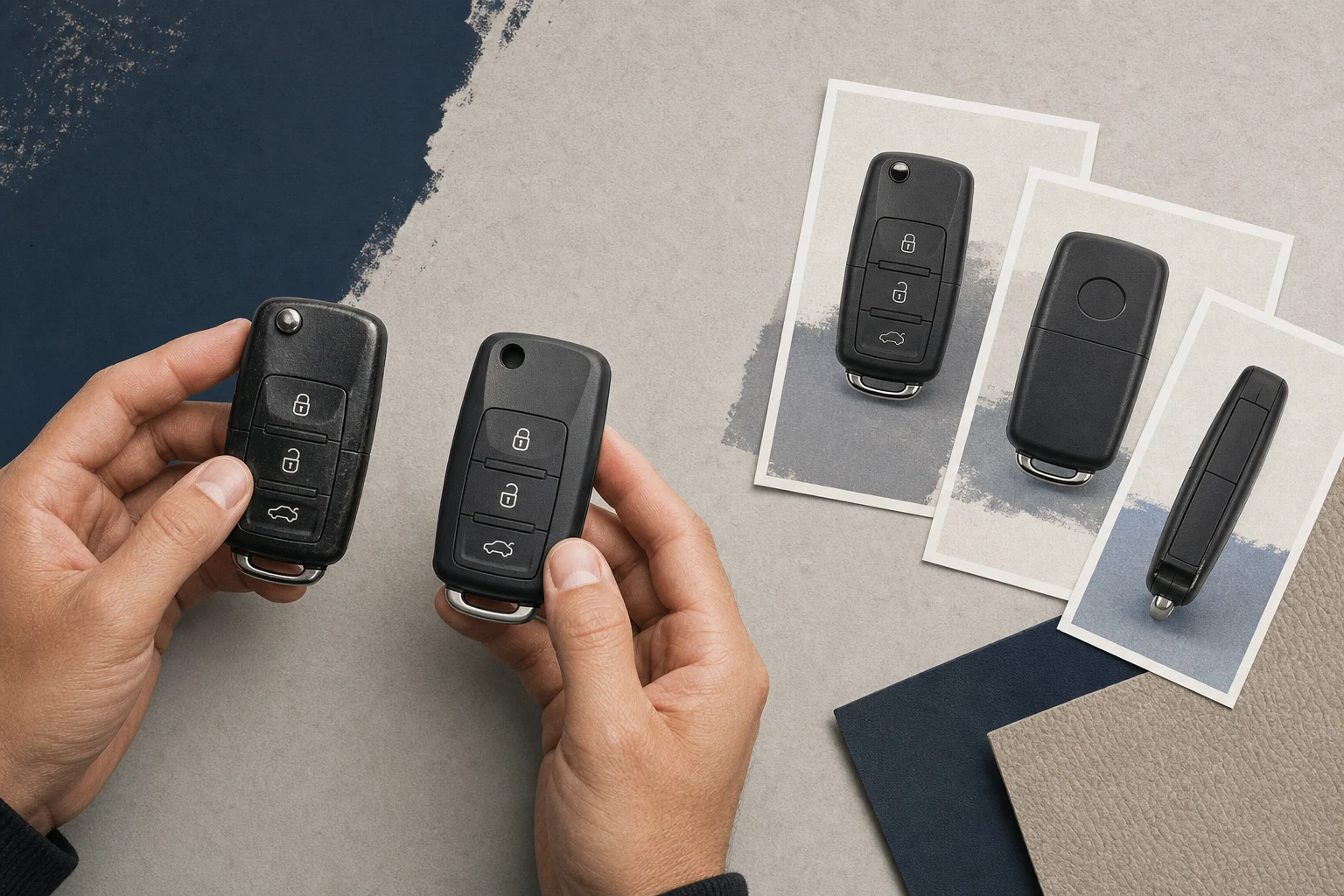
- One Porsche model name may cover different key designs.
- A matching button count does not prove internal compatibility.
- Treat product descriptions as claims to verify, not automatic fitment proof.
Choose the option that matches your vehicle and situation.
Frequently asked questions
Does a Porsche replacement key shell include the electronics?
A replacement shell generally means the outer casing only. It may not include the circuit board, buttons, transponder or other internal parts. Always check the individual product description or ask the supplier to confirm exactly what is included before ordering.
Can I move the electronics from my old Porsche key into a new shell?
This may be possible if the original electronics are still usable and the replacement housing is designed to accept them. The internal layout, board shape, button positions and transponder arrangement must match. Do not assume that electronics from one Porsche key will transfer to every similar-looking shell.
Is the number of buttons enough to identify the correct Porsche key shell?
No. Button count is useful, but it is only one identification point. Compare the button layout, housing shape, key-ring attachment, seams and internal arrangement with the original. Two shells can have the same number of buttons while differing in shape or in the way their components fit.
Does a Porsche key shell come with a replacement blade?
Not necessarily. Some shells are supplied without a blade, while others may include one. Check whether the blade is present, which profile it uses and how it attaches to the housing. A blade may also need to be cut or transferred separately, depending on the replacement option.
Can a replacement shell fix a missing Porsche transponder?
No. A shell replaces the casing; it does not replace a missing or faulty transponder. The same applies to damaged remote electronics or other internal components. If those parts are unavailable or unusable, a complete replacement-key solution may need to be considered instead.
Can the same Porsche model use more than one key design?
Yes, a model name alone may not identify one specific key design. Different production periods, equipment versions or key systems may use different housings and internal layouts. Treat the original key as essential evidence and compare its shape, buttons, blade and internal components before selecting a replacement.
What if my original Porsche key electronics are damaged?
A shell-only replacement is unlikely to solve the problem if the circuit board, remote components or transponder are damaged. A complete replacement-key route may be more appropriate, but the available solution depends on the required components and the provider’s verified capabilities. Confirm this before ordering.
What details should I provide when checking Porsche key compatibility?
Provide clear photos of the front, back and side of the original key, along with the button layout and any markings. Include blade details, key-ring position and information about which components are missing or damaged. If available, component or part numbers can help confirm compatibility, but they should not replace a physical comparison.
