
- A replacement housing may help if damaged hinge-side plastic causes the sticking and the new shell includes matching pivot parts.
- A new outer shell alone cannot straighten a bent key blade or restore a blade that is otherwise damaged.
- A stiff flip action does not identify one failed part; pivot friction, misalignment and hinge damage can produce similar symptoms.
- The Passat name and button count do not confirm fit; compare the original hinge, blade mounting and internal housing layout.
- A bare shell does not replace the key’s remote electronics or any immobilizer component required by the original key.
- If the blade binds after the correct parts are assembled, forcing it risks further damage and the fault needs reassessment.
A Passat flip key that sticks as you fold or open it does not automatically need a new housing. A replacement shell may help if the plastic around the hinge is cracked or distorted. It will not straighten a bent blade, and it may not solve a fault in a part that must be transferred from the old key. Before ordering, notice where the movement stops: does the blade rub against the casing, bind at the pivot or catch as it enters the slot?
For readers of car-keys.lt, that distinction is more useful than choosing a housing by appearance alone. Two shells can look similar in a photo yet differ in their blade mount, button layout or space for the electronics. Even if the outer shape looks right, the replacement needs to match the parts you intend to reuse.
The checks below start with the sticking hinge and help you decide whether a damaged housing is a plausible cause or whether the problem lies elsewhere. They also show what to compare before buying a Volkswagen Passat flip key shell. If the blade resists movement, avoid forcing it just to test a theory; that could make the fault harder to assess.
What does the sticking blade actually do?
Before opening the key or ordering a Volkswagen Passat flip key shell, try to describe exactly when the blade sticks. Does it hesitate as it flips out, resist when you fold it back, or catch in both directions? Note whether it stops near the closed position, partway through its travel, or just before it reaches the open position. Those details are more useful than “the hinge is stuck.”
Watch the release button during a normal attempt. Does it press and return as usual, feel slow to return, or sit at an angle? Then watch the blade: does it start moving when you press the button, move only partway, or stay put? Observe rather than repeatedly pressing or snapping the blade open to make it move.
Look at the seam around the flip key blade pivot while the blade is closed and open, if it will reach those positions without force. Record any uneven gap, a section of housing that has lifted, or a place where the blade appears to brush the case. A clear photo from each side can help you compare what you saw later, without relying on memory.
With the key in your hand, check for visible cracks, chipped edges or a loose-feeling section near the hinge and button. You can gently check whether the two sides of the case sit together, but do not twist the blade or squeeze the housing to test its strength. If a crack widens or a piece shifts as you handle the key, stop cycling it.
Finally, separate a repeatable catch from general stiffness. A repeatable catch happens at roughly the same point each time: for example, the blade travels freely, then stops halfway through closing. General stiffness feels similar throughout the movement, even if the blade still reaches both end positions. Note whether the behaviour changes depending on which way you hold the key, but avoid repeated tests if movement feels strained.
A short description such as “opens normally, catches halfway closed, button returns, and there is a visible gap beside the pivot” gives you a clearer starting point than “Passat flip key hinge stuck.” If you cannot move the blade safely, record what is visible and leave it there.
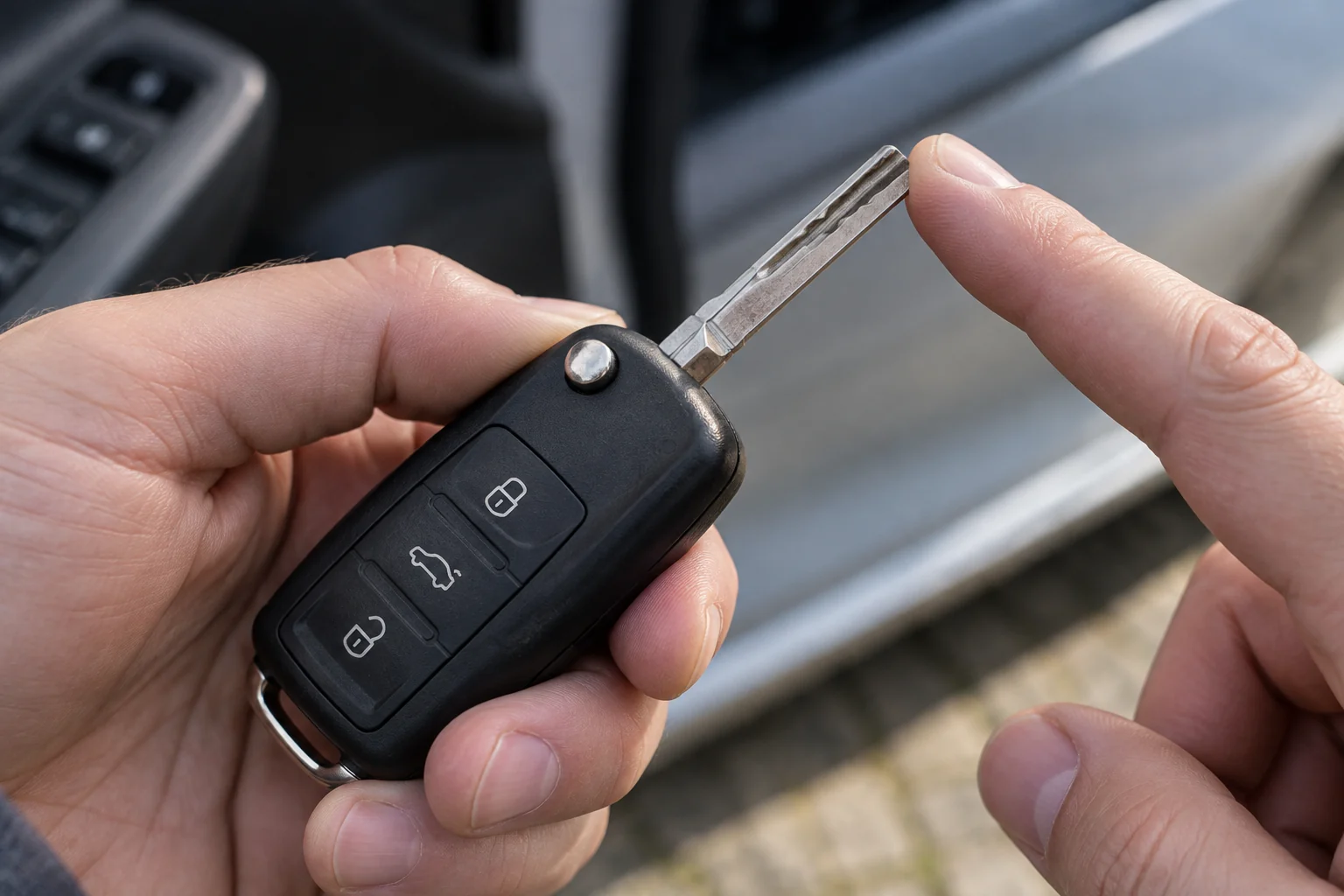
When can a replacement shell help—and when can’t it?
A replacement shell can help when the sticking comes from damaged plastic around the hinge. For example, a cracked pivot seat may no longer hold the blade assembly in line, or a broken edge may obstruct its movement. In that case, sound replacement housing could remove the obstruction. It is not, however, a remedy for every blade that feels stiff: the fault may be in the blade or pivot parts rather than the outer case.
| Likely fault | Is a shell likely to help? | More appropriate next step |
|---|---|---|
| Cracked or broken hinge-side plastic lets the pivot shift or catches the blade | Possibly, if the replacement provides the housing and pivot support the key needs | Identify which part is damaged before treating the shell as the fix |
| A pivot pin, spring or release mechanism is damaged | Only if the replacement includes the required part and it is suitable for the key | Confirm the fault and what the proposed remedy actually provides |
| The metal blade or its mounting end is bent or damaged | No; new plastic will not straighten metal | Have the blade or blade assembly assessed for replacement |
| The hinge is intact but movement is restricted by friction or parts sitting out of line | Not necessarily; a new case may leave the cause untouched | Identify what is rubbing or misaligned before ordering |
The distinction matters most where plastic and metal meet. If the plastic that supports the flip key blade pivot is broken, replacing that plastic may restore proper support. If the metal pivot or the blade’s mounting end is distorted, fitting it into fresh housing may simply reproduce the bind. A new shell cannot make a bent blade track straight.
Do not assume that “replacement shell” means a complete hinge mechanism. Some products may be outer case pieces; others may include additional parts. Before relying on a shell to remedy a broken pivot support, manually confirm that the specific item includes the pivot parts your fault calls for. If the damaged part is absent, the shell alone is not an adequate remedy, even if its exterior looks like the original key.
Friction and misalignment need a separate judgment. A small obstruction at the hinge can make an otherwise sound case feel faulty, while a displaced component can rub against sound plastic. Neither finding automatically calls for a Passat key shell replacement. Conversely, if the housing itself is warped and causes that contact, a suitable new housing may help. The useful question is not simply “Does the blade stick?” but “Which part is making it stick?”
If that answer is unclear, avoid buying a Volkswagen Passat flip key shell on the assumption that stiffness proves the case is broken. First establish whether the obstruction belongs to the housing, the pivot mechanism or the blade. That boundary determines whether a shell is a plausible fix or merely a new cover around the same fault.
- Damaged hinge-side housing: a matching shell may help if it includes the required pivot parts.
- Bent or damaged blade: replacing the outer housing will not straighten it.
- Uncertain cause: similar sticking symptoms do not prove the housing has failed.
What must match before you order a Passat key shell?
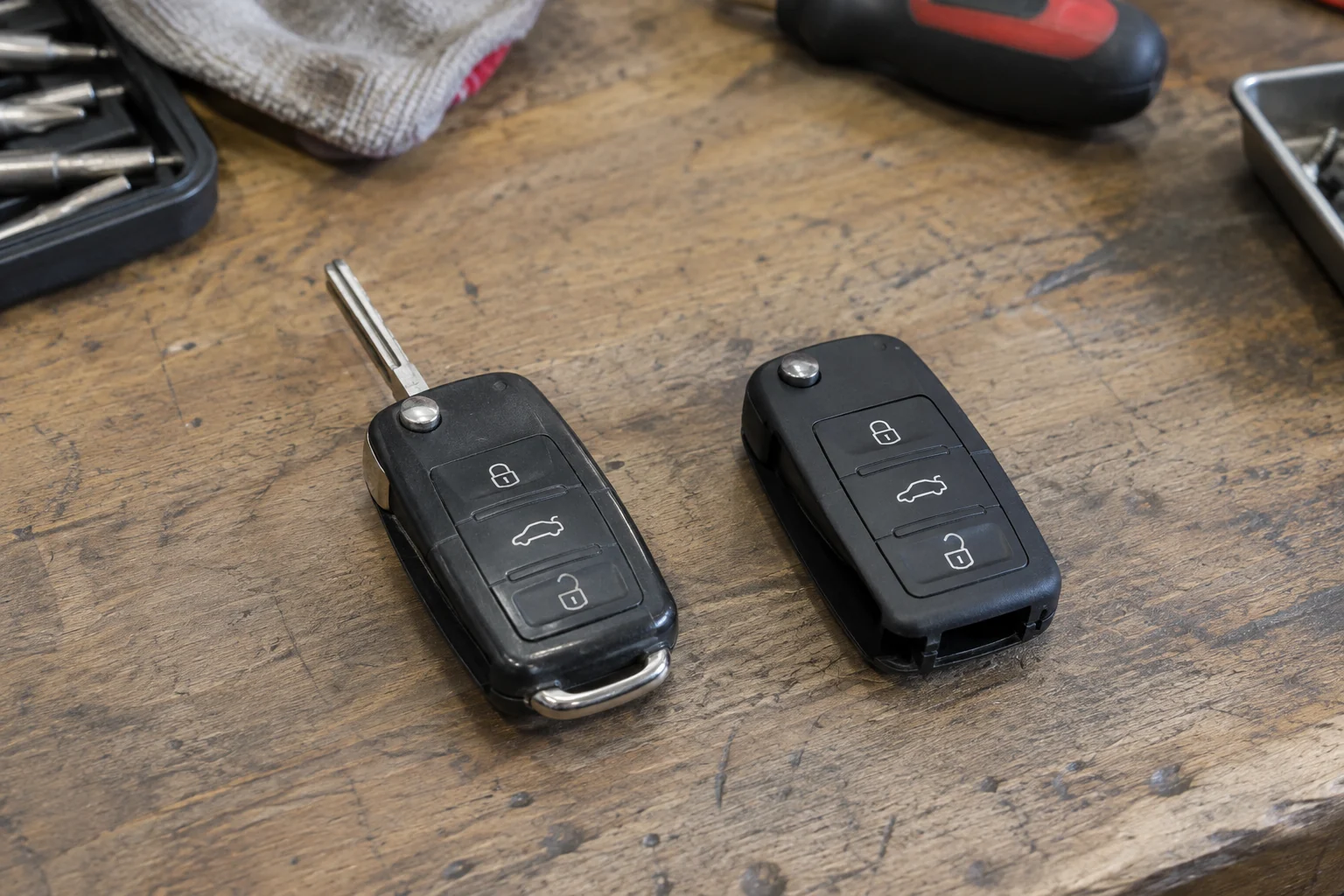
Match the replacement to the key in your hand, not just to the words “Passat” or “flip key” in a listing. Keys with the same button count and a similar outline can have different hinge assemblies, blade mounts and internal layouts. Before ordering a Volkswagen Passat flip key shell, compare clear photos of the original key with photos of the proposed replacement from several angles. If the listing shows only a closed key, ask for open-key and interior views.
Start at the hinge. Compare where the blade rotates, the shape of the pivot area and how the release button meets the blade assembly. Check whether the replacement has the same arrangement for the pivot pin and spring, rather than assuming those parts will fit because the outer cases look alike. A difference that seems minor in a product photo may matter when the blade folds into the housing. If you cannot see the hinge construction clearly, treat the match as unconfirmed.
Next, check how the blade is mounted. Does the original blade attach to a separate carrier, or is it part of a blade-and-pivot assembly? Compare the shape of the blade base, its retaining features and the space available for it inside the replacement housing. A listing may show a blade with a familiar profile while using a different mounting arrangement. Ask whether the pictured blade is included and whether the housing accepts your existing blade assembly; those are separate questions.
The two halves of the case must also match inside. Compare the positions and shapes of the supports for the circuit board, buttons and battery compartment, as well as any spaces provided for other components in your original key. Check the button openings and case edges against your key, not merely against a seller’s vehicle list. If internal photos are unavailable, ask for them before buying. An exterior match alone does not establish that the case will close properly around the original parts.
Finally, read the contents of the listing literally. “Replacement flip key housing” might mean two plastic halves only, or it might include buttons, a blade blank, a spring or pivot hardware. Identify which hinge parts you would need the product to supply, then confirm they are actually included. Check whether the blade shown is supplied, whether it is blank, and whether any claim of vehicle compatibility is backed by details that match your original key. If the seller cannot confirm the physical construction or what comes in the package, do not rely on the Passat name and button count to settle the purchase.
- Hinge and pivot arrangement
- Blade mounting
- Internal component layout
- Included parts, especially hinge hardware and blade
What stays with the original key during a shell change?
A bare Volkswagen Passat flip key shell is a housing, not a complete working key. The remote circuit board normally has to come from the original key; a new case does not make a worn or damaged board work again. Before buying, check exactly what the seller supplies. Photos of a key with buttons do not establish that electronics, a battery, a blade or the small parts inside are included.
Also account for the component that lets the car recognise the key for starting. Depending on the original key’s construction, the immobilizer component may be separate from the remote board or incorporated into it. Do not assume that every key contains a loose chip you can simply lift out—or that a replacement housing includes one. If you cannot identify where that function sits in your original key, get it checked before opening the case or discarding any part of it.
The blade needs its own plan. A listing may supply an empty blade mount, an uncut blade or no blade at all; none is automatically a substitute for the blade you use now. Establish whether the original blade can be retained or whether the supplied blade would need cutting. Keep the original blade with the other key components until you have a complete, working replacement.
During a housing change, document placement before removing anything. Clear photos of each side as it opens can help you remember where the board, battery, buttons and any loose pieces sat. Work over a tray or uncluttered surface so a small spring, pin or insert cannot roll away. Set parts down in the order you remove them rather than mixing them with pieces from the new housing.
Handle the board by its edges where practical, and avoid pulling on battery contacts or pressing against tiny mounted parts. Keep it dry and do not force a component that appears secured in place. If a chip or board seems bonded into the old case, guessing where to pry risks turning a housing change into a non-working key. Stop and seek help rather than breaking the component to free it.
Before closing the new housing, check that the retained components sit securely without being pinched and that the buttons can reach their switches without constant pressure. Preserve the old shell and any unused parts until you have confirmed that the remote functions and the key starts the car as it did before. A neatly assembled case is not, by itself, proof that everything essential was transferred.
What if the blade still binds after assembly?
If the blade still catches after you fit the Volkswagen Passat flip key shell, stop rather than force it through the stiff point. Repeatedly pressing the release button or pushing the blade harder can damage the housing or make a small alignment problem harder to identify. Do not rely on the key while the blade will not open and lock into position normally.
First, check the assembled case without putting pressure on the hinge. Are the two halves closed evenly around the pivot, or is there a gap on one side? Does the blade rub against the edge of its slot at the same point on every attempt? A visible gap or a repeatable contact point gives you a place to recheck, rather than a reason to keep working the blade back and forth.
If you can safely reopen the case and keep its small parts in place, check that the blade assembly sits fully in its intended position and that the housing closes without shifting it. Also check whether the release button moves and returns freely. If closing the case introduces the bind, something may be displaced or pinched; do not trim or force parts to make the case shut.
If everything appears seated but the blade still binds, reconsider the parts rather than assuming the new shell needs wearing in. The blade or its mounting point may be damaged, or the replacement housing may differ in a way that was not obvious before assembly. That is a reason to pause, not to keep trying the flip action.
If you cannot locate the contact point, are unsure whether the blade is secure, or cannot reassemble the key without force, have it assessed in person by someone who works with vehicle keys. Bring the original parts and the replacement housing so they can be compared directly.
A sticking flip blade is a reason to inspect the key, not proof that it needs a new shell. Look for cracked plastic or damage around the pivot, but also check whether the blade is bent or the difficulty occurs only when using the lock. If you decide to replace the housing, compare it with your existing key, including the blade and internal layout; “Passat” in a listing is not enough to establish compatibility. Checking the cause first can help you avoid buying a shell that leaves the fault unchanged.
- Stop testing if the assembled blade catches or resists movement.
- Recheck the fit and alignment before further use.
- Get the fault assessed if its cause remains uncertain.
Passat flip-key questions
Will a replacement shell arrive with a cut key blade?
Not necessarily. A listing may offer a shell alone, a shell with a blank blade, or a blade supplied separately. If you’re comparing options on car-keys.lt, check the individual listing for what is included and whether any supplied blade is cut. Don’t assume a pictured blade will be ready to use.
Is the hinge spring included with a replacement shell?
Check the included-parts list before ordering. A photo of an assembled flip key does not establish that the spring comes with the shell. If the listing does not say, ask the seller rather than relying on the picture—particularly if a missing or damaged spring is the reason you’re considering a new housing.
Can I reuse the blade from my original key?
Possibly, if the blade is in good condition and its mounting fits the replacement shell. Inspect it for bending or damage, and check how it attaches to the hinge. Don’t force an old blade into a mounting that looks different; the blade and housing need to work together without strain.
Does changing only the shell mean the key needs programming?
Changing the outer housing alone does not, by itself, change how the key is programmed. The important distinction is what happens to the original electronics and immobilizer component during the swap. If either is replaced, damaged or not transferred correctly, the key may no longer work as expected. Don’t treat a shell change as a reason to discard those parts.
What if this is my only working key?
Plan the change before opening it. Confirm that you have the right housing, a clear place to keep small parts, and enough time to stop if something does not fit. Taking apart your only usable key without a backup can leave you unable to use the car if a component is lost or damaged.
Should I put household oil on a stiff flip-key hinge?
Avoid adding oil before you know why the hinge is stiff. It may spread into parts of the key where you did not intend it to go, while doing nothing to correct a damaged or misaligned hinge. First note whether the blade catches at one point, rubs the housing, or resists movement throughout its travel.
Can I keep using the key while its blade is stuck open?
You may be able to carry it temporarily, but protect the exposed blade from being bent or knocked. Keep it separate from anything that could press against it in a pocket or bag. Don’t twist it shut or force it past a point where it catches; that could make the fault worse.
What if the remote buttons stop working after a shell change?
Check that the original electronic parts are seated as intended and that the new buttons press them properly. Also check whether anything shifted while the housing was closed. If the placement looks right but the remote still fails, stop repeatedly opening and closing the key and seek qualified help to identify the cause.
Choose the option that matches your vehicle and situation.
Frequently asked questions
Where can I find more information?
More information is available at car-keys.lt.
